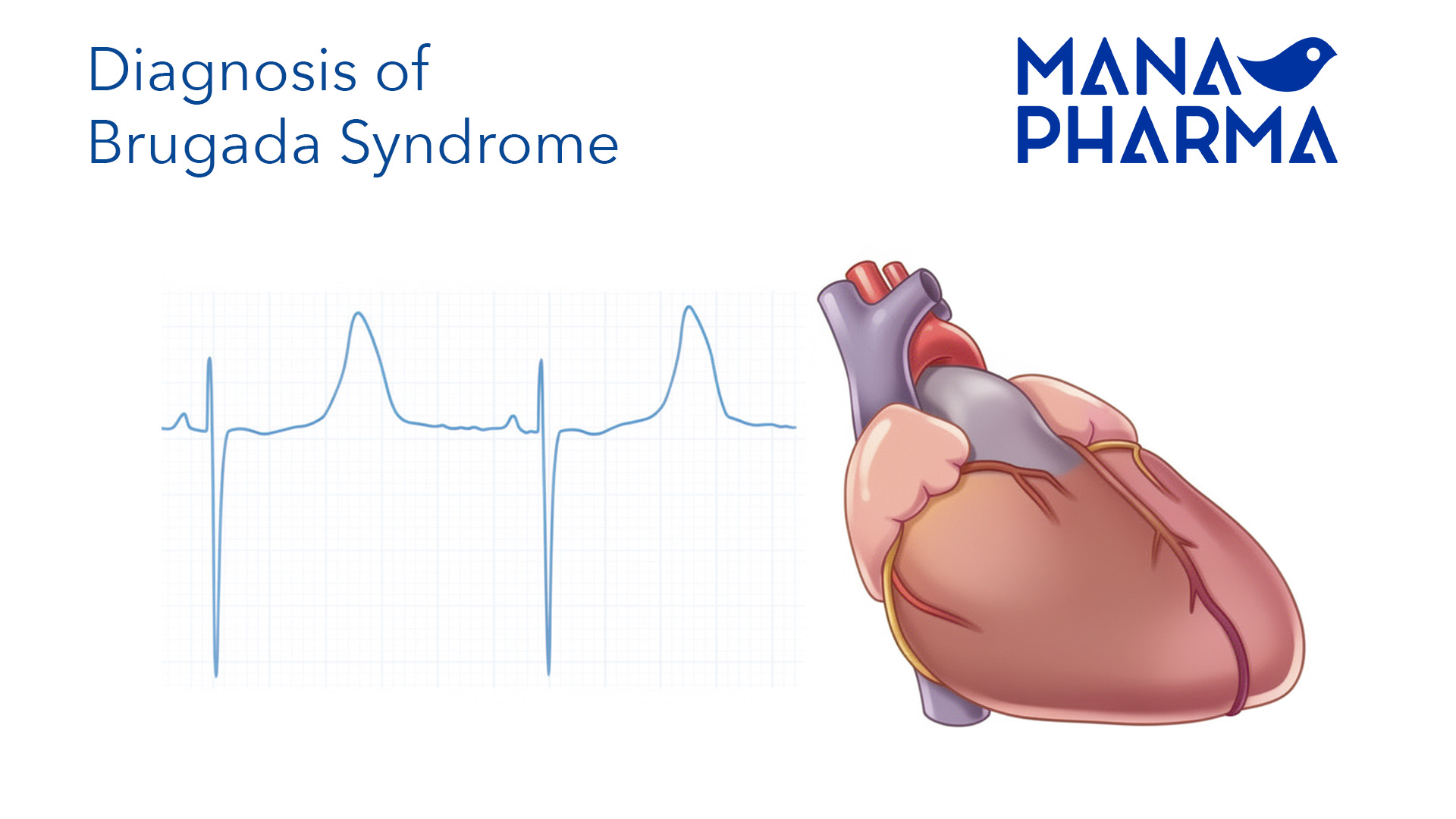



Diagnosis of Brugada Syndrome: the Procainamide Test, a Safe and Reliable Tool
Brugada syndrome is an electrical disorder of the heart that can predispose individuals to serious ventricular arrhythmias and, in some cases, sudden cardiac death. Its diagnosis is not always straightforward: many patients do not spontaneously exhibit the typical electrocardiographic pattern and require pharmacological provocation tests to confirm or rule it out.
A recent multicenter study published in Circulation has thoroughly evaluated the role of the procainamide test as a diagnostic method in nearly 1,000 patients investigated for suspected Brugada syndrome. The findings are particularly relevant to daily clinical practice.
What does the test involve?
Procainamide is an antiarrhythmic drug that, when administered intravenously under continuous monitoring, can “unmask” the characteristic type 1 electrocardiographic pattern of Brugada syndrome in patients who do not show it at baseline.
Key conclusions of the study
Excellent safety:
Out of 947 patients undergoing the test, only 2 (0.2%) experienced transient, asymptomatic ventricular arrhythmias that resolved upon stopping the infusion. No serious events or need for defibrillation were recorded. This confirms that procainamide is an extremely safe diagnostic option when used in a controlled setting.Context-dependent diagnostic yield:
The likelihood of a positive result varies according to the reason for testing:22% in individuals with a family history of Brugada syndrome
7% in survivors of unexplained cardiac arrest
46% in patients with ambiguous electrocardiographic patterns (types 2 or 3)
High diagnostic accuracy:
The test demonstrated very high estimated sensitivity (≈92%) and similarly high specificity, making it a reliable tool for confirming or ruling out the diagnosis.Favorable prognosis in asymptomatic patients:
A particularly reassuring finding is that asymptomatic patients who exhibit a type 1 pattern only after procainamide administration have an extremely low risk of malignant arrhythmias in the medium term. Over an average follow-up of nearly six years, none experienced serious events.
What does this mean for the general practitioner?
The procainamide test is now a reference method in North America and Europe for investigating Brugada syndrome.
It can be requested for patients with unexplained syncope, suggestive family history, or ambiguous ECG findings.
Its safety profile allows it to be performed confidently in specialized centers.
A positive result in an asymptomatic patient should not cause excessive alarm: it is often associated with a favorable prognosis, although cardiology follow-up is required.
Key Takeaway
Procainamide offers an optimal balance of safety, efficacy, and diagnostic accuracy for the investigation of Brugada syndrome. For the non-specialist physician, familiarity with this tool facilitates the proper identification of at-risk patients and enables more precise and well-founded referrals.
Legal Notice
This content is for informational and educational purposes only. It does not replace the clinical judgment of a healthcare professional nor does it constitute individualized diagnostic or therapeutic advice. The information is based on data from published scientific studies and should be interpreted within the context of clinical practice and current clinical guidelines.