


Traceability as the Structural Backbone of the Supply Chain
In pharmaceutical distribution, traceability is not a peripheral attribute of the logistics system; it is its structural backbone. For a company specialized in the global distribution of medicines and medical devices, the ability to precisely determine the origin, transit path, and final destination of each distributed unit is both an operational and regulatory requirement. Traceability safeguards patient safety, ensures regulatory compliance, and reinforces client trust.
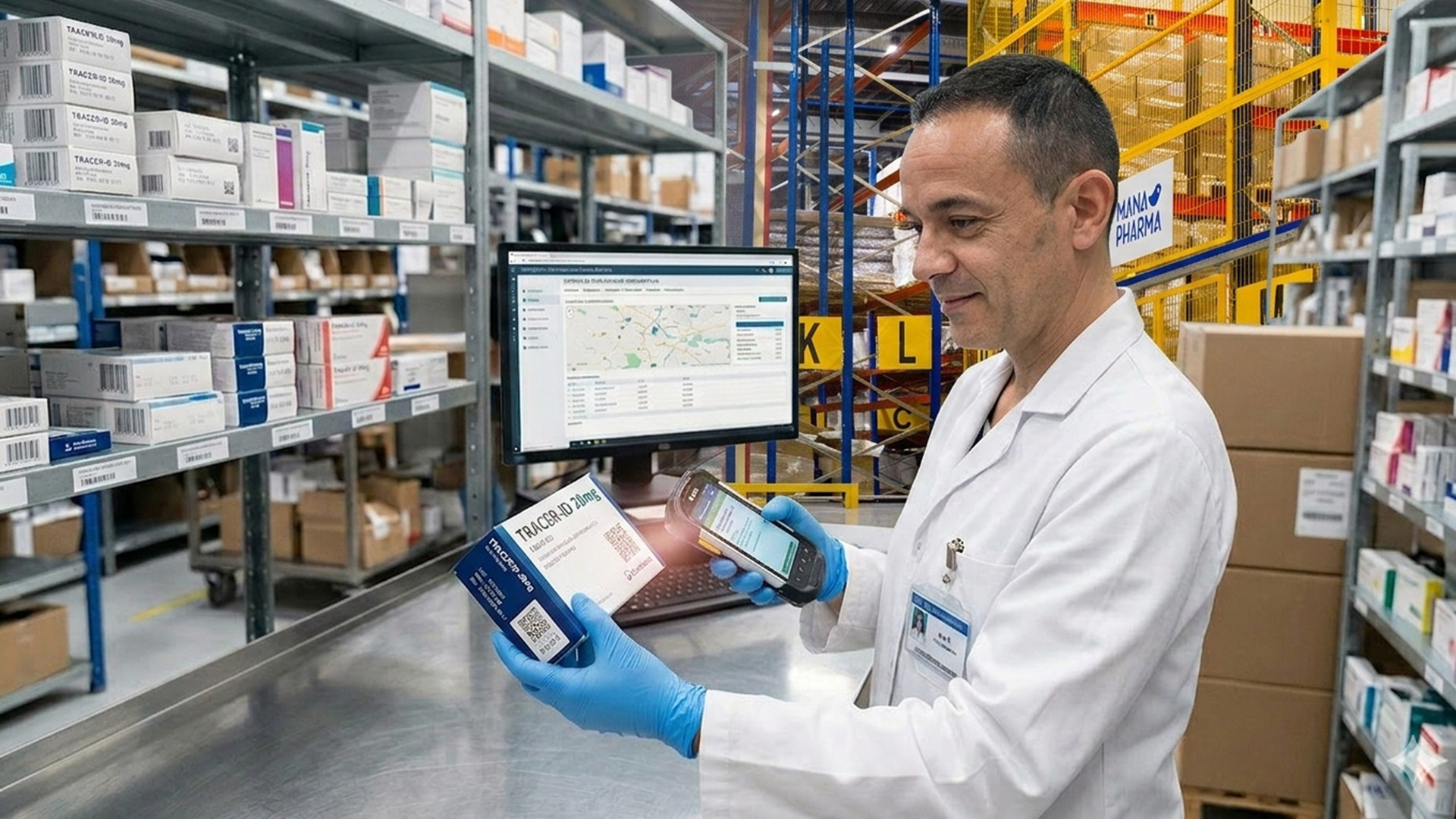
From a technical standpoint, traceability entails the unique identification of each batch—and in many cases each individual unit—through serialization systems, DataMatrix codes, logistical aggregation, and interoperable electronic records. This integrated ecosystem enables the full reconstruction of the supply chain at any given moment: manufacturer, production date, storage conditions, international transit, local distribution, and final delivery.
Critical Risks in the Absence of Traceability
1. Public Health Risk
The primary concern is patient safety. Medicinal products and medical devices are sensitive goods, many of which are thermolabile or subject to strict conservation and quality controls. End-to-end traceability combined with temperature and humidity monitoring systems ensures the integrity of the cold chain.
If a deviation occurs, immediate batch identification minimizes impact and prevents the distribution of potentially compromised products. This control mechanism protects patients and strengthens corporate credibility before regulatory authorities and strategic partners.
2. Regulatory Risk
Pharmaceutical distribution operates within a highly regulated international framework. Regulatory instruments such as the Falsified Medicines Directive in Europe and the Drug Supply Chain Security Act in the United States mandate robust verification and record-keeping systems.
A distributor operating across multiple jurisdictions must harmonize heterogeneous compliance requirements without sacrificing operational efficiency. Digital traceability infrastructures enable rapid response to audits, inspections, and information requests, reducing administrative friction and exposure to sanctions.
3. Counterfeit Prevention
The pharmaceutical sector remains a prime target for illicit networks. Serialization and point-of-dispensation verification mechanisms significantly reduce the risk of falsified products entering the legal supply chain.
For an international distributor such as MANA PHARMA, implementing real-time authentication and validation systems is not merely a regulatory obligation; it constitutes a core element of corporate responsibility. Healthcare system trust depends on supply chain integrity.
Traceability in Medical Devices
Within the medical device segment, traceability introduces additional dimensions. Many devices require maintenance, calibration, or post-market surveillance. Recording their distribution path and final location facilitates technical updates, corrective actions, or preventive recalls in response to safety alerts.
In this context, traceability connects logistics with lifecycle management and post-market vigilance, reinforcing overall product governance.
Strategic and Competitive Implications
From a strategic perspective, traceability represents a competitive differentiator. International laboratories and manufacturers prioritize logistics partners capable of delivering full operational transparency.
A robust digital infrastructure integrated with ERP systems, warehouse management systems (WMS), and real-time tracking platforms generates tangible added value. The objective extends beyond transportation; it encompasses integrity assurance, end-to-end visibility, and uncompromised compliance.
Traceability also contributes to operational sustainability. Route optimization, reduction of unnecessary returns, and efficient expiry management reduce waste and carbon footprint. In an environment increasingly shaped by ESG criteria and corporate social responsibility metrics, traceability provides measurable indicators of environmental commitment and logistical efficiency.
Reputational and Brand Protection Dimension
Trust constitutes a high-value intangible asset in pharmaceutical distribution. A poorly managed incident can erode it rapidly. Conversely, the ability to identify a specific batch within minutes, activate a structured recall procedure, and communicate transparently reinforces perceptions of professionalism and control.
Traceability therefore operates not only as a regulatory requirement but also as a mechanism of brand protection.
Organizational Culture and Continuous Improvement
For a company specialized in the global distribution of medicines and medical devices, traceability extends beyond technical compliance. It reflects an organizational culture grounded in precision, anticipation, and accountability.
It requires sustained investment in technology, structured team training, continuous auditing, and adaptive process review to remain aligned with evolving regulatory landscapes.
Conclusion
Traceability is a structural pillar of modern pharmaceutical distribution. It protects patients, ensures compliance with international regulatory frameworks, combats counterfeiting, optimizes operational performance, and strengthens corporate reputation.
In a sector characterized by minimal tolerance for error and maximal social impact, a fully traceable supply chain is not an optional advantage. It is an indispensable standard.
Do you have any questions about how traceability is implemented at MANA PHARMA? Contact us for further information.