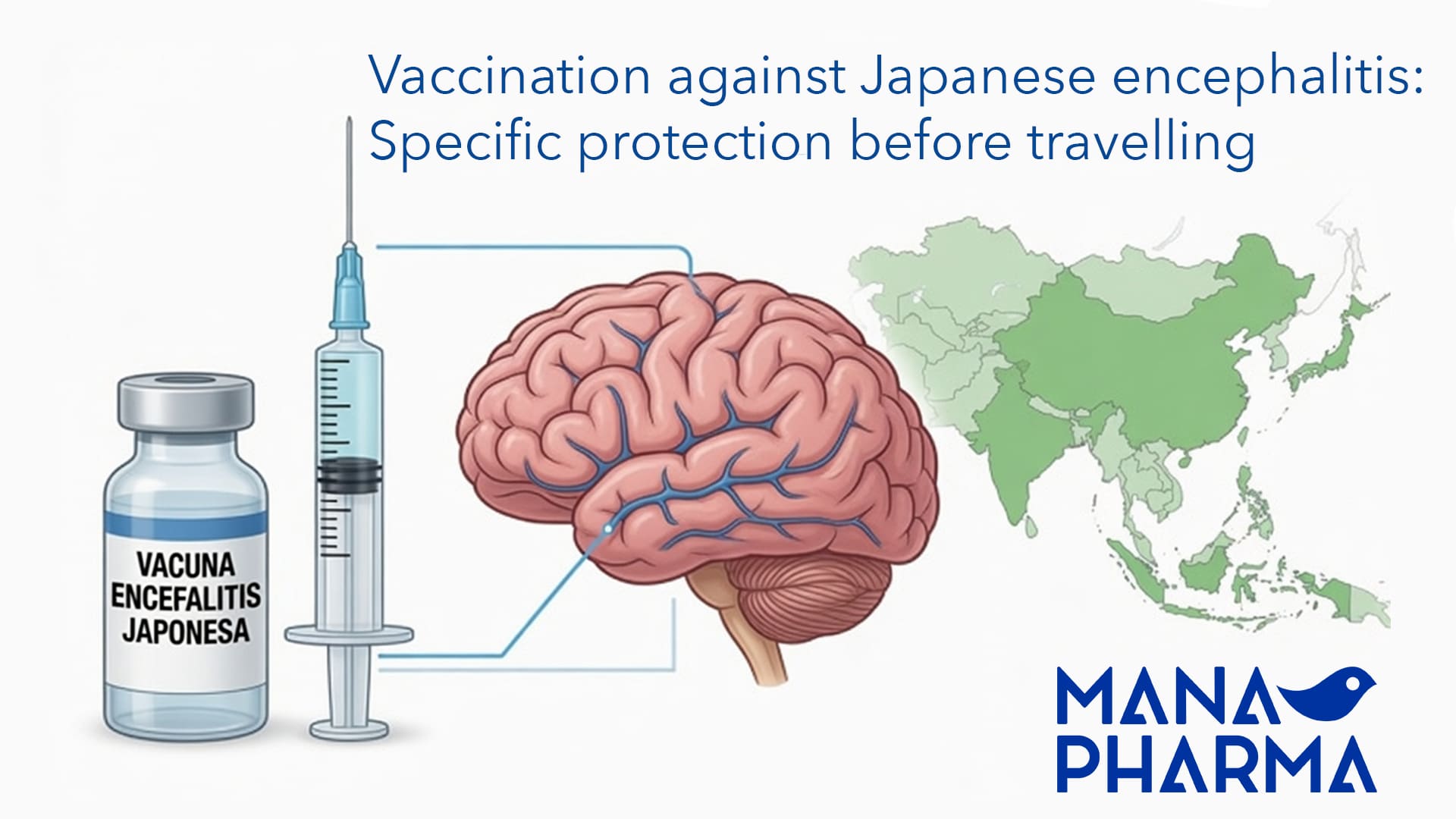



Vaccination against Japanese encephalitis: specific protection before travelling
A recent study by Letson and colleagues, published in 2024, analysed the impact of Japanese encephalitis vaccination programmes in countries where the infection is endemic. Its main conclusion is clear: when vaccination is implemented consistently and with good coverage, cases of Japanese encephalitis decrease significantly.
Japanese encephalitis is a mosquito-borne disease. Although many infections go unnoticed, in some cases the virus can affect the brain and cause severe illness, with the risk of neurological sequelae or even death. For this reason, prevention is particularly important for people travelling to or staying in risk areas.
Japanese encephalitis is endemic across large areas of Southeast Asia, the Western Pacific, and northern Australia, with the highest risk in rural and agricultural regions, particularly near rice paddies and pig farms. The peak transmission season usually occurs during the monsoon and the summer/autumn months.
The inactivated adsorbed vaccine against the Japanese encephalitis virus offers a relevant safety advantage: it does not contain live virus, meaning it cannot cause the disease. In addition, it allows travellers to plan a specific preventive strategy before trips, long stays, or activities in areas where there is a risk of exposure.
The final message is simple: against a rare but potentially serious infection, vaccination allows travellers to anticipate the risk and travel with more complete protection.
George W. Letson et al. Impact of vaccination against Japanese encephalitis in endemic countries. PLOS Neglected Tropical Diseases. 2024;18(9):e0012390.